Showing posts with label Stained Glass Scapulars. Show all posts

Sunday, March 1, 2020

Stained Glass Scapulars-Reflections on the Secular Carmelite Rule

Please enjoy this post from the archives of Spirit Singing


Photo: R. Massaro (C) 2017 Spirit Singing


From Poustinia by Servant of God, Catherine de Hueck Doherty:


If we are to witness to Christ in today's marketplaces, where there are constant demands on our whole person, we need silence. If we are to be always available, not only physically, but by empathy, sympathy, friendship, understanding and boundless caritas, we need silence. To be able to give joyous, unflagging hospitality, not only of house and food, but of mind, heart, body and soul, we need silence.

True silence is the search of man for God.


True silence is a suspension bridge that a soul in love with God builds to cross the dark, frightening gullies of its own mind, the strange chasms of temptation, the depthless precipices of its own fears that impede its way to God.


True silence is the speech of lovers...


What wonderful words of wisdom from Servant of God, Catherine.  As Secular Carmelites,  we should exclaim, "Spoken like a true Carmelite, Catherine."  Although her book was published in 1975, her writings are certainly prophetic in nature. She understands clearly the spiritual problems that can arise in a technological society. She understands the current age; the attachment to materialism, individualism, relativism and a deep lack of desire for solitude and prayer.  The first line of the excerpt above speaks right from the heart of St. Teresa of Jesus who teaches us that prayer and contemplation are gifts given to strengthen us for service.

She is also very Carmelite in nature when she writes of the desert and the poustinia as a state of being. She writes that poustinia is a condition of the heart and soul of a man or woman. How do we find this place of the heart where God dwells? Her teaching is that we need to stand still. "Stand still, and allow the strange, deadly restlessness of our tragic age to fall away like the worn-out, dusty cloak that it is...the restlessness was considered the magic carpet to tomorrow, but now in reality we see it for what it is: a running away from oneself..."


We can now turn to our Carmelite saints and their teaching for more on this "standing still" spirituality. Who, but Saint Elizabeth of the Trinity, the holy Carmelite of the "Indwelling of the Trinity," speaks of this "chapel of the heart" where we can enter anytime and find intimate friendship with God. It is the chapel that is always available to us through prayer and contemplation.  It is the place where we enter to adore the living God present in our soul. 

She writes: I think that in Heaven my mission will be to draw souls by helping them to go out of themselves in order to cling to God by a wholly simple and loving movement, and to keep them in this great silence within which will allow God to communicate Himself to them and to transform them into Himself.

"To keep them in this great silence..." this is the teaching of Catherine also: at first such silences will be few and far between. But if nourished with a life of liturgical prayer, mental prayer, with the sacramental life of the Church, slowly, slowly, like a seedling of a mighty tree, silence will grow and come to dwell in a soul more and more often. Then suddenly, it will come to stay one day.

Yes, this is what we are seeking: union with God. The union of Martha and Mary. The union of the active and contemplative life. We are called to be missionaries in the marketplace while possessing the silent heart of a contemplative. These two are joined by the Holy Spirit who go about their daily activities united with the Beloved, so that all things are done through Him, with Him, and in Him.

Secular Carmelites are called to a little "poustinia" each day. We are called to 1/2 hour of mental prayer. Many followers of Carmelite spirituality will confess that they have a difficult time being faithful to the time of prayer that is required of us.  We need to stop looking at this requirement as an obligation (although it is) and look at it as a joyful entrance into silence where God meets us face-to-face, where we can, in Catherine's words, "shed the cloak of restlessness" and experience the peace of heart that God offers to us in prayer.

Let us pray for each other, that we be faithful to our commitment to prayer. Remember, this gift is not for ourselves alone, but for the entire Body of Christ.  It is our gift to our brothers and sisters in Christ. Please, let us be generous givers of God's gifts.

Catherine Doherty is the founder of Madonna House.  Here is a movie about this foundation entitled "The People of the Towel and Water:


Peace be with you!
Rosemarie, ocds


Wednesday, February 14, 2018

STAINED GLASS SCAPULARS

Reflections on the Rule of the Secular Order of
 Discalced Carmelites

Photo: R Massaro Copyright (2018)Spirit Singing


Lent has begun and people have thought about what they will give up as a Lenten sacrifice. I encourage all of us as Secular Carmelites to enter into this holy season by resolving to live our Carmelite promises more faithfully, because the vocation to Carmel can be summed up in the three pillars of the Lenten season: Prayer, Fasting, almsgiving.  As Carmelites, we are called to live out the spirit of the Lenten season throughout the year.

I know, I know, this challenge may sound shocking and frightening, because we live in the world. Right? We have families, and jobs, and other responsibilities. But  I remind myself and all of us who are professed that we stood before the Altar and made a promise to God in the company of our brothers and sisters in community and before the Communion of Saints that we would strive to “Follow the Crucified and Risen Lord.” Do we take this promise seriously each day?

How do we live out the pillars of the Lenten season?

PRAYER

We are called to pray daily, not only the Liturgy of the Hours, but we are to spend ½ hour in quiet prayer. This is the minimum requirement.  Let us truly make an effort to offer more of our time to the Lord.  We can pray at home or go to Mass daily and pray before and after Mass. We can make a Eucharistic Holy hour.  One only has to read the news to see that our world is in desperate need of prayer, of conversion. It is the spiritual call of the Carmelites to pray on behalf of the Church. 

FASTING

We don’t have to give up great things.  We can incorporate St. Therese’s Little Way into our penitential life by giving up something small each day.  Perhaps it’s about not having a favorite food, or having water instead of another favorite beverage. But let’s go deeper. Can we give up our need to talk or respond instead of truly listening to someone? Do we always need to be heard? Do we always need to give our opinion?  Let us give up being critical of others, of gossiping. We can help someone at home by saving them from some housework or chore. Can we give up an hour’s sleep to get up earlier and start the day with prayer? There are so many ways we can live more deeply our calling to accept the cross and to be intimate friends with Jesus Christ. 

The Order of Carmel is one of the most penitential orders in the Church.  The traditional Discalced Carmelite nuns observe strict papal enclosure. They only go out in public for medical reasons. The nuns sleep on hard beds and adhere to a vegetarian diet. They fast from the feast of the Exaltation of the Cross until Easter and they live this life of penance in a spirit of great joy! We share the same Carmelite Rule of St. Albert with the nuns. However, we are not asked to give up as much and yet we make excuses. Let us pray for the nuns who are praying and offering sacrifice for us every day.

ALMSGIVING

As Carmelites we are to participate in an active apostolate. Are you involved at your parish? Many times we can perform works of charity right at home. The Carmelite is called to share the fruit of his prayer, this is our Lenten Almsgiving that we are called to live out in our daily lives. The fruit of our prayer is nothing less than offering to others mercy, justice, and peace, the spirit of the Beatitudes.  So, along with living the three pillars of Lent, I encourage us to meditate on the Beatitudes. This holy state of being, of being Christlike is the great witness we give as Carmelites. 

From our Carmelite Promise:

I ____________________, inspired by the Holy Spirit, in response to God’s call, sincerely promise to the Superiors of the Order of the Teresian Carmel, and to you my brothers and sisters, to tend toward evangelical perfection in the spirit of the evangelical counsels of chastity, poverty, obedience, and of the Beatitudes, according to the Rule of St. Albert and the Constitutions of the Secular Order of Discalced Carmelites, for the rest of my life. I confidently entrust this, my Promise, to the Virgin Mary, Mother and Queen of Carmel. 


Let us pray for each other that we have the courage to follow the Crucified and Risen Lord not only during Lent but each and every day of our Carmelite life.


Peace be with you!

Rosemarie. OCDS

Sunday, November 5, 2017

STAINED GLASS SCAPULARS

Reflections on the Rule of the 
Secular Order of Discalced Carmelites


From the Statutes:

#19

In addition to the days of fasting and of abstinence proper to the Church of the USA and responding to the encouragement of our bishops "to prepare for each Church festival by a day of particular self-denial, penitential prayer and fasting" (NCCB Pastoral Statement "Penitent Discipline" to the US, Washington, DC, 1966) and to our Carmelite traditions, unless excused by reasons of illness or age, we will observe the following:

a)  Members will fast on the Vigils of the following feast days:

     St. Joseph the Worker
     May 1

     Our Lady of Mount Carmel
     July 16

     The Prophet Elijah
     July 20

     St. Therese
     October 1

     Holy Mother St. Teresa of Jesus
     October 15

     All Carmelite Saints
     November 14

     Holy Father St. John of the Cross
     December 14

b)  For a sufficient reason, the above special fast days may be
     anticipated.

c)  Anticipated fast days should never involve fasting on Sundays 
     or Holy Days.

The Order of Carmel is one of the most penitential religious orders in the Church.  As Secular Carmelites, we have a different vocation by living in the world, but we share in the same graces and spiritual heritage of our religious brothers and sisters.  Let us be resolved to be faithful to our Carmelite discipline of prayer and fasting.

Soon, we will celebrate All Saints of Carmel on November 14. Let us be faithful to our day of fasting and abstinence on November 13, so that we may celebrate with joy the Saints of Carmel who have gone before us.  

One only has to read the news to see that our world needs God's mercy! Let us draw down His mercy by offering Him our poor prayers and penance on behalf of sinners.

May all the Saints of Carmel, all those holy souls who were faithful to their Carmelite promises, intercede for us and for our world. 

Peace be with you!
Rosemarie, OCDS


Sunday, November 10, 2013

Stained-Glass Scapulars-Reflections on the Rule of the Secular Order of Discalced Carmelites


The Rule: #16
The beatitudes are a plan of action for life and a way to enter into relationship with the world, neighbors and co-workers, families and friends. By promising to live the beatitudes in daily life, Secular Carmelites seek to give evangelical witness as members of the Church and the Order, and by this witness invite the world to follow Christ: 'The Way, the Truth and the Life" (Jn 14:6).

In the above excerpt from the Rule our Superiors instruct us to have a "plan of action" for life: the beatitudes. A plan of action takes study, preparation, discipline and commitment. How many people plan and prepare for their day spiritually before they leave the door and enter the world: the spiritual battlefield?  Our one opponent, Satan, seeks to destroy the progress we are trying to make as we grow in charity.  This plan of action is the "marching orders" from the King: Jesus Christ!  He has given a Rule for every human being to follow:

*How blest are the poor in spirit: the rein of God is theirs.
  The Carmelite is called to live a life of detachment-seeking to abide in that blessed state of soul where Christ is all we have and all that we need.

*Blest too are the sorrowing; they shall be consoled.
  A life of prayer and contemplation bring self-knowledge, the painful truth of how we have sinned against God and neighbor. This knowledge should bring us to repentance of heart so that we have true sorrow for sin. Each day we must make the choice of turning away from sin and being faithful to the Gospel.

*Blest are the lowly; they shall inherit the land.
  The Carmelite is called to walk this earth in humility. St. Teresa is very stern when it comes to people (Carmelites) seeking to steal the honor and glory that belongs to God alone-seeking honor among people, by looking for affirmation and compliments and seeking credit for one's virtues.

*Blest are they who hunger and thirst for holiness; they shall have their fill. 
  In today's society, it seems difficult to find a soul that is truly desperate for God. Of course, we cannot discern someone's interior life, but how many people speak as if they were hungry and thirsty for God?  The person who is seeking the "Bread of Life and the "Living Water" is a rare creature, indeed. This person is the "voice crying out in the desert" of our wicked and depraved society.  His voice is drowned out by the world telling us to eat and drink and be merry!  Being faithful to prayer makes us desire the bread of holiness. Prayer with the Beloved, the Living Water, quenches our spiritual thirst.

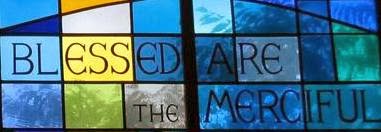
*Blest are they who show mercy; mercy shall be theirs.
  When we began this discussion on the Rule, we mentioned that these beatitudes are "plan of action." The Carmelite, by being faithful to prayer, creates an interior dwelling place for the Living God. When we go out into the world we take this most Merciful Savior with us. He is the bread of mercy that we offer to others. Mercy is not conditional, we do not dole it out when we feel like it.  A merciful person, is a blessed person. He is a person in a holy state of being-"not far from the reign of God."  This is the heart of all the beatitudes.  If you possess mercy, you will not find it hard to live a life of beatitude.

*Blest are the single-hearted for they shall see God.
   Carmelites are called to quiet prayer on behalf of the Church.  Many things distract us and keep us from our purpose and mission.  St. Teresa teaches us that self-indulgence and prayer do not go together. When we get "comfortable," when we start giving in to every whim of the body, little room is left for the difficult discipline of prayer. Our mind rebels, our body rebels, and our spirit rebels. We lose our focus of "God alone."  The heart that is divided is not in a blessed state of union that we are seeking as Carmelites.  This 
spiritual affliction reflects in our daily lives. We say one thing and do another. We profess to be merciful, but are far from it. We profess to be peacemakers, but within, we are far from it.  When Jesus saw Nathaniel, he said, "...There is no guile in him."  God is calling us to purity of heart, a state of being in which our thought, words, and actions are in a spiritual marriage pleasing to God.

*Blest too the peacemakers; they shall be called sons of God.
  Being a peacemaker requires great effort and the daily dying to our ego. Whether at work, home, or in the marketplace we have many opportunities to foster peace.  We can be peaceful people by the words we choose. We can be peacemakers by the tone of voice we choose. We can be peacemakers by having a peaceful countenance. True peace emanates from the heart. True peacemakers are known by their very presence.  Peace is not a matter of  an absence of conflict. It's the way we approach difficult situations; keeping charity in mind, keeping mercy in mind, keeping humility in mind. 

*Blest are the persecuted for holiness' sake; the reign of God is theirs.
How many of us are really persecuted for our faith?  Perhaps people don't agree with our chosen lifestyle: praying, attending Mass daily, performing works of charity. But these are things we can suffer and offer up.  Many people in our day are truly persecuted for their faith. Their churches are burned, the Gospel is burned, priests are silenced and imprisoned and martyred. Let us pray for all those who are persecuted and killed for the sake of the Gospel. 

*Blest are you when they insult you and persecute you and utter every kind of slander against you because of me... 
If you've ever been given a tongue-lashing because you were a Christian, well, you've suffered a little. Perhaps it was from a member of your own family!  Some Christians, some Carmelites, are insulted by the ones who claim to love them, simply because they want to live a godly life. Think of the person who goes to work faithfully each day and suffers the ridicule and comments from others because they know they are Catholic. Day after day they have to endure the comments. Think of the religious, the priest or nun who is falsely accused of some awful crime by someone who hates the Church. They are removed from ministry, they are falsely imprisoned...these are the martyrs of today.


Let us pray for each other, that we take our plan of action, the Beatitudes, seriously each day.  If we are faithful to prayer, they will become a part of us and flow from the heart-the heart of God dwelling within us.


Peace be with you!
Rosemarie, OCDS

Wednesday, July 24, 2013

MASS ETIQUETTE

STAINED-GLASS SCAPULARS
Reflections on the Rule of the 
Secular Order of Discalced Carmelites

Photo:R.Massaro(C)2013SpiritSinging
St. Anthony Church Akron, Ohio

From the Rule:
#24
The value of the sacramental and liturgical life in the Secular Order leads its members to take part in the celebration of the Eucharist, in as far as possible. They will try to recite Morning Prayer and Evening Prayer of the Hours in union with the Church spread throughout the world. When it is possible they will also recite Night Prayer. Their participation in the sacrament of Reconciliation and the other sacraments of the Church will assist the process of their conversion.


Photo:R.Massaro(c)2013SpiritSinging
Lourdes, France

Resources on the Liturgy from the United States Conference of
 Catholic Bishops

PRAYING WITH BODY, MIND, AND VOICE

CELEBRATING THE LORD'S DAY

LITURGY AND LIFE


Peace be with you!
Rosemarie, ocds
Wednesday, April 3, 2013

Stained Glass Scapulars-Reflections on the Rule of the Secular Carmelites


Photo: R.Massaro(C)2013SpiritSinging

Just a few short days ago all of the members of the Catholic Church who were present for Mass at the Easter vigil or at Mass on Easter Sunday renewed their baptismal promises. It is fitting then, that the Order of Carmel asks each of its members to renew their promises during the Easter season.

Our Rule states:

Article 12:

By the promise made to the community in the presence of the Superior of the Order or his Delegate, the person becomes a full member of the Secular Order. By this commitment members strive to acquire the necessary training to know the reasons, the content and purpose of the evangelical lifestyle they are undertaking. The promise heightens and enriches the baptismal commitment in the Secular Carmelites. This includes those called to married life, both as spouses and as parents. This promise is renewed once a year at Easter time.


Members should prepare to renew their promises with prayer and reflection and thanksgiving.  It is also a good time to start this "new year' with an examination of conscience to see where we have failed to live up to our promises and the living out of the beatitudes in our daily lives.

It's good to celebrate the anniversary of our promises.  Do you remember the date of your promise?  This should be as important as remembering  and celebrating our baptismal date. If one is married, the wedding anniversary date should be remembered with joy and thanksgiving with the intention of trying to be more faithful to the vows more than ever.  Remember, when we made our Carmelite promises it was a spiritual marriage to the order and to our local community. We took on a new name (religious title) and made a commitment to the community that we would strive to help each other achieve union with God, just as husbands and wives make this commitment to help each other reach heaven.

Here are some questions for discernment:

*Have I been faithful to mental prayer?
*Have I been faithful to the obligations of the Secular Carmelite?
*Do I fast on the designated vigils of the Carmelite Saints?
*Have I missed meetings out of laziness?
*Do I foster fraternal charity within the community?
*Do I know the names of the members in my community?
*Do I pray for the members of my community on a daily basis?
*Do I pray for the superiors of the order on a daily basis?
*Do I pray for the deceased members of the order?
*Do I pray for the Carmelite missions?
*Do I pray for the priest I have spiritually adopted for the year?
*What is the date of my temporary profession? My final profession? My Carmelite vow?
*What is my religious title?
*What is my active apostolate?    Am I faithful to it?

These are just a few questions we can ask ourselves.  For Carmelites, we know that our main obligation is mental prayer.  If we are not praying, if we are not being faithful to the praying of the Liturgy of the Hours, we must strive to begin again. Remember, even our Holy Mother, St. Teresa gave up prayer for about 2 years.  She said this was one of the greatest mistakes of her life.  She tells us over and over again to never give up prayer.

Here is the promise formula. It's good to read it over while meditating to prepare to renew the promise/vow.


I, _________________, inspired by the Holy Spirit, in response to God's call, sincerely promise to the Superiors of the Order of the Teresian Carmel and to you my brothers and sisters, to tend toward evangelical perfection in the spirit of the evangelical counsels of chastity, poverty, obedience, and of the Beatitudes, according to the Constitutions of the Secular Order of the Discalced Carmelites, for three years (or the rest of my life). I confidently entrust this, my promise, to the Virgin Mary, Mother and Queen of Carmel.


Let us pray for each other!


Peace be with you!
Rosemarie, OCDS

Saturday, January 26, 2013

SATURDAY OF OUR LADY

Photo:R.Massaro


From the Rule (Constitutions) of the Secular Order of Discalced Carmelites-No.4

The Virgin Mary is present in a special way, most of all as a model of faithfulness in listening to the Lord and in service to Him and to others. Mary is the one who preserved in her heart the life and actions of her Son and meditated on them (Luke 2:51), providing for us an example of contemplation. At Cana she counseled to do what the Lord commanded (John 2:5), Mary is an example of apostolic service. On another occasion, she waited, persevering in prayer with the apostles (Acts 1:14), for the coming of the Holy Spirit, thus giving witness to intercessory prayer. She is Mother of the Order. Secular Carmel enjoys her special protection and cultivates a sincere Marian devotion.

Fr. Greg Homeming, OCD-The Sacrament of the Cross


Peace be with you!
Rosemarie, ocds

Thursday, November 17, 2011

Stained Glass Scapulars-Reflections on the Secular Carmelite Rule

Article 9:

Taking into account the origins of Carmel and the Tersian charism, the fundamental elements of the vocation of Teresian Secular Carmelites can be summarized as follows:

a)  "to live in allegiance to Jesus Christ." supported by the imitation and patronage of the Blessed Virgin Mary, whose way of life is, for Carmel, a model of being conformed to Christ.

b)  to seek a mysterious union with God; by way of contemplation and apostolic activity, indissolubly joined together, for service to the Church;

I will stop at this point today and post on the other three points of Article 9 in the future.

For now, let us consider point b: to seek a mysterious union with God...  Do you like a good mystery?  Or do you dislike trying to figure things out bit-by-bit?  Because of our human nature, we like to have things made perfectly clear to us.  This can be the case in our spiritual lives as well. We will not make much progress if we are constantly trying to figure out the mysterious ways of  God's will  for us.  Even St. John of the Cross warns us that we can put up a roadblock to advancing in prayer because of our futile effort to figure out God. 

The point of our Rule states "to seek" this mystery.  We must take an active part in this intimate relationship with the Beloved. We must seek him out while in prayer, while at work, while at home, while sleeping, while breathing...this seeking of the mysterious union with God should become a perpetual desire of our heart, not something that comes to mind occasionally. 

The next part of point b is that we seek this union with God by way of contemplation.  This may actually seem funny if we think about it.  For what other way would there be to seek union with God if not by prayer and contemplation?  Even St. Teresa of Jesus seems a  little perplexed when speaking of the soul as the castle and the door by which we enter this castle as prayer, she states "As far as I can understand, the door of entry into this castle is prayer and meditation..."(IC, Chap.1, No. 7). Yes, to communicate with God one needs to pray. 

Our Secular Carmelite Rule takes this relationship even deeper by saying to seek God by way of contemplation, yet we know that contemplation is a total gift from God, a type of prayer of the heart that we are not able to produce on our own. Then the next part of the exhortation: apostolic activity, indissolubly joined together for service to the Church.  Uh Oh!  Now I may have to leave this special place of prayer and actually go out and help my family, my neighbor, my co-workers.  This could get ugly!  Can't I go back to prayer?  Yes, of course, good and faithful Carmelite.  There is a time for prayer and a time for service.  May we be given the wisdom to know the difference!

As secular Carmelites we are to seek the face of God in prayer on behalf of the Church, so while our mission is one of prayer and contemplation, we must share the fruit of our prayer and be witnesses and missionaries in the world. This missionary work should begin at home. Let us be good witnesses to the love of God in our families, our family of Carmel, at work, at our parish and in the marketplace. There are no exceptions--we never take a break from trying to respond in charity.

Article 9 summarized: prayer and work on behalf of the Church.  Let us be faithful to this marriage of contemplation and service. Let us pray for each other.


Peace be with you!
Rosemarie, OCDS
__________________

Friday, September 9, 2011

Stained Glass Scapulars-Reflections on the Secular Carmelite Rule

From the Constitutions:

#16

The beatitudes are a plan of action for life and a way to enter into relationship with the world, neighbors and co-workers, families and friends. By promising to live the beatitudes in daily life, Secular Carmelites seek to give evangelical witness as members of the Church and the Order, and by this witness invite the world to follow Christ: "the Way, the Truth and the Life" (Jn. 14:6).

As Secular Carmelites I think sometimes we can overlook the beatitudes in our life.  Of course, we know we must participate in  an apostolate wether as a part of a community or individually. So, we think of some things we can "do" such as make rosaries, make scapulars, etc.  While these are holy and good active apostolates, we should ask ourselves how we are living out this active apostolate in terms of our behavior. 

The quote above from our Constitution tells us that we are witnesses in the world who invite the world to follow Christ!  Wow! did you ever think you could have the whole world follow your holy example?  Yet, that is the ideal we are called to.  So let us examine ourselves and discern wether we are that type of person who is a light in the world. 

Are we living the beatitudes by being merciful to others? Especially those we live and work with? Do we hold grudges, refusing to forgive?  This type of person does not draw others to follow him.

Do we mourn over our sins and failings?  Or do we respond to our weaknesses and sins with the attitude of, "oh, well, I'm human."

Are we pure of heart?  We may not know this, but the fruits would be apparent.  People would be spiritually attracted to us.  We can look at the lives of the Saints to see this reality.  St. Bernard had over 30 men follow him to found a monastery.  Look at the lives of our holy Carmelite parents, St. John of the Cross and St. Teresa, and of course, the "Little Flower." WE are following, running after these saints because we are spiritually attracted to them.  Of course, we know we are attracted to Christ living and working in them.

Let us continue this holy circle of following the saints of Carmel and have others follow us, we know that Christ is leading the way. Let us live a life of beatitude in imitation of Jesus Christ, the Way, the Truth, and the Life.

Peace be with you!
Rosemarie, ocds
________________________

Wednesday, August 10, 2011

Stained Glass Scapulars-Reflections on the Secular Carmelite Rule

Photo:R.Massaro(c)2011SpiritSinging
From our Constitutions:
The central object of the process of formation in the Secular Order is to prepare the person to live the charism and spirituality of Carmel in its following of Christ, and in service to its mission.
(VI, No. 32)

This point of our Rule brings us back to the heart of our formation: preparing those called to Carmel to be open to the gift of contemplation, and to bring the fruit of this intimate friendship with God into our homes, workplace, and in our local communities.  Sometimes, those of us who have been involved with formation for new members concentrate on the other aspects of the candidate.  I think we have a tendency to focus on the personality of an individual-will they "fit" into our community. Although this is an important point of discernment, even according to St. Teresa, we must be careful about this aspect of discernment. We must get passed personalities and discern if the person has a gift of quiet prayer and if this person will be faithful in practicing mental prayer and living out this gift in their state of life.

The person in formation needs to challenge themselves by being honest during their discernment time with the community. They can ask themselves some questions:

*Do I read the assigned materials?
*Do I seek the assistance of the Carmelite Saints. Am I attracted to them?
*Do I share my discernment process with others, or am I embarrassed to let others know I am seeking entrance into Carmel?
*Do I seek to spend time in quiet prayer, forsaking other worldly
distractions?
*Do I possess humility in seeking help when I am struggling with prayer, with trying to live the Beatitudes?

These are questions all of us in Carmel need to keep asking ourselves.

We come to community to help each other in striving to be faithful to our promises of chastity, obedience, and poverty.  We are all on pilgrimage together. Let us be kind and patient with those who are weak or struggling. May the Lord help us to lead each other gently by the hand up Mt. Carmel. May we be ever-thankful that he has called us to follow him in Carmel.

Let us pray for each other!


Peace be with you!
Rosemarie, ocds
___________________

Wednesday, June 15, 2011

Stained Glass Scapulars-Reflections on the Secular Carmelite Rule


From the Rule of St. Albert:

As the life of man upon earth is a warfare and all who live piously in Christ shall suffer persecution; moreover your adversary, the devil, goes about seeking whom he may devour. Endeavor, therefore, with all diligence to put on the armor of God, that you may be able to stand against the snares of the devil. Gird your loins with the girdle of chastity and guard your hearts with holy thought, for it is written: a holy thought shall preserve you...

What are some of the snares of the devil  in which we can be trapped ? The dictionary states that a snare is a "skillful maneuver."  It is a trap to entangle one's prey.We know from Scripture that Satan is intelligent, cunning, and deceitful. He knows our weaknesses and plays upon them.  We must guard ourselves with prayer to build our spiritual strength for the time of temptation and trial that is a part of our daily life. We must strive to guard the door of our heart and mind and be diligent about what we let enter the temple of the Holy Spirit.

As Secular Carmelites, we build these spiritual muscles by being faithful to prayer each day.  God does the work of purifying our heart so that we can see the snares of the devil before us and avoid them. We are called to receive the Sacraments on a regular basis, these vehicles of grace, too, strengthen us for the perilous journey we must make toward union with God.

As Secular Carmelites, we must also have an intense love for Our Lady, especially to her under the title of "Our Lady of Mt. Carmel." She will defend us now and at the hour of our death if we keep close to her every moment of our lives.

St. Therese of the Child Jesus is just one saint that comes to mind as we discuss this subject of preparing for battle with our enemy. She prepared herself for the difficult moments of monastery life with prayer. She was able to respond charitably in these difficult moments, because she put on the armor of love. She fought the good fight and now we call her "Doctor of Love. "

St. Therese knew herself through prayer, she received the same gift of self-knowledge that God will give to each of us if we remain faithful to prayer. The devil doesn't need to reveal our weaknesses, the Lord himself does this for us in prayer so that we may prepare ourselves for those moments of spiritual battle.We know that this battle is mainly an interior battle, it includes our intellect, our memory, and our will. The three powers of our soul that St. John of the Cross writes so eloquently about.


Let us pray for each other that we be given the gift of self-knowledge, that we may know our weaknesses and faults; through this knowledge we will be given the spiritual insight to prepare for battle with that "roaring lion" who seeks to destroy us.

Peace be with you!
Rosemarie, ocds
___________________

Tuesday, May 3, 2011

Stained Glass Scapulars-Reflections on the Secular Carmelite Rule


From the Constitutions-#19

Occupying a privileged place in nourishing the prayer life of Carmelite Seculars will be the study and spiritual reading of Scripture and the writings of our Saints, particularly those who are Doctors of the Church: St. Teresa, St. John of the Cross and St. Therese of the Child Jesus. The Church's documents are also food and inspiration for a commitment to follow Jesus.

This point of our Constitution may be one that is a little neglected. We may follow the other points of the Rule by attending Mass and and praying the Liturgy of the Hours, but how are we doing when it comes to spiritual reading, and not only reading, but studying Scripture and the writings of our Carmelite Doctors? Yes, we know it does take reading and re-reading and study to understand the works of St. Teresa and St. John of the Cross, that is why our formation in Carmel never ends.  The study of Scripture and Carmelite writings is a life-long journey.  We stress this to new members who may be discouraged at first by those who have been in Carmel a long time and have a deep knowledge of Carmelite writings.  Everyone has to begin at the beginning!

You may ask why do we need to study? Why can't we just read and pray?  Well, let's go back to the Constitutions to point no. 18:

Prayer, a dialogue of friendship with God, ought to be nourished by His Word so that this dialogue becomes that, "we speak to Him when we pray; we hear Him when we read the divine word". God's Word will nourish the contemplative experience of Carmelite Seculars and their mission in the world...

So here we are to the heart of the matter and the reason for study: to deepen our friendship with God. We are called to imitate the Virgin Mary who pondered the Word in her heart. The Word, must take root in our heart, so that we can give this fruit of our prayer to others-our mission in the world. Are we overflowing with the fruit of the Word? Does Scripture flow easily from our mind, to our heart, to our lips?

St. Therese is only one of the many Carmelite saints we can look to for an example of the living Word of God that takes root in the heart.  Her writings and her life are an open book of the Gospel.  We know that God sealed upon her heart the Word of love, and we are still reaping the fruit of her intimate prayer life with God by reading her works and following her example.

Let us be faithful to our commitment of mental prayer and spiritual reading and study.  If we want to get to know someone we must spend time with them. Let us spend time with the One whom we know loves us. Let us spend time nourishing our spiritual lives with the Word of God.


Peace be with you!
Rosemarie, ocds
________________

Sunday, March 13, 2011

Stained Glass Scapulars-Reflections on the Secular Carmelite Rule


Photo: R. Massaro St. Anthony Church Akron, Ohio

From the Constitutions, Daily Life, #3:

Called to continual conversion, Secular Carmelites will seek to identify and place before God any obstacles and impediments to union with him. Confident in God's loving mercy, they will:

a)  Engage in a daily examination of conscience, ideally just before retiring or at the beginning of Night Prayer.

b)  Participate frequently in the Sacrament of Reconciliation.
This short statement is powerful in nature, and a point of obedience that we should be following each day.  Perhaps we have been skimming over this point, after all, doesn't the Rule state to pray Night Prayer if possible...? And why should we be getting all worked up examining our conscience before going to bed? Oh my, how will one ever get to sleep?

We do not need to get stressed out over this discipline that every Christian is called to each day.  If we are truly living the spiritual life and trying to avoid even venial sins because of the love we have for God, we will know when we have sinned or failed against charity in the smallest of matters.  As the Psalmist says, "My sin is always before me..." Those who have the smallest infractions on their hearts and minds do not need to take the "shopping list" into the confessional, they only need to say what is already overflowing in their heart-sorrow for having failed in charity or other matters.

The person of sincere humility will have no trouble sleeping in God's peace after this examination, because he has acknowledged his sin and trusts in God's mercy and forgiveness. The truly humble soul is hopeful of God's help to overcome his faults and failings, and never tires of starting over.

We can bring our sins, faults, and imperfections to the Sacrament of Reconciliation on a regular basis in order to perfect ourselves, to grow in holiness and to remove all obstacles that may hinder our intimate relationship with the Lord.

St. Teresa teaches us that with prayer comes self-knowledge. We know that the Lord brings to our heart and mind in these silent moments with him the faults we need to work on. It takes humility to respond, "yes, Lord." If we are in denial or put up road blocks in our heart when the Holy Spirit tries to bring to mind where we have failed-this can be a serious obstacle to growing in virtue and holiness.  We must be courageous souls willing to see ourselves as we are, unpleasant though it may be.  We can be consoled, however, because we only have to look at the lives of our Carmelite saints to know that they have travelled this same road of self-knowledge. Let us follow them, for they took up their cross and followed Christ.
 

Peace be with you!
Rosemarie, OCDS
___________________

Monday, February 21, 2011

Stained Glass Scapulars-Reflections on the Secular Carmelite Rule

Photo: R. Massaro St. Anthony Church Akron, Ohio

From the Constitutions Section 1, No. 3

The members of the Secular Order of Discalced Carmelites are faithful members of the Church, called to live in allegiance to Jesus Christ through a friendship with the one we know loves us...

This short excerpt taken from  paragraph 3 states the essence of our Secular Carmelite vocation. This excerpt is threefold in nature:

#1: Faithful members of the Church.

#2: Fidelity to Jesus Christ

#3: Friendship with Jesus Christ

The readers of this blog may say, "Ok, you are preaching to the choir."  Patience, dear reader, let us hear the message, and let it take deeper root in our hearts and minds. Let us examine our conscience in light of these three virtues.

We can ask ourselves if we are truly faithful members of the Roman Catholic Church. We know that when we came to Carmel we had to provide a baptismal certificate, we had to show that we are members of the church, in good standing, before we were clothed with the Scapular.  Now we can ask ourselves if we have gotten off-track along-the-way by not adhering to church teaching in certain matters, perhaps an illicit relationship, occult practices or new-age teachings.  This is not being a faithful member of the church.

We can examine ourselves further in light of #2-fidelity or allegiance to Jesus Christ. Do we let people and situations become an obstacle to our union with Christ.  The Carmelite Order is studying the Way of Perfection this year, and recently our community discussed the chapters in which St. Teresa speaks of the harm relatives can do to our spiritual lives if we are not careful. Are we more faithful to worldly pastimes and pleasures than performing works of charity? Are we afraid to speak the truth when necessary? Do we compromise our beliefs as Catholics, as Carmelites in order to please others? This is not fidelity to Jesus Christ.

Now we come to the heart of the Carmelite vocation: friendship with Jesus Christ.  Yes, this is the heart of our calling. We are called to spend time in intimate friendship with Our Lord and Savior. What a beautiful and awesome calling! We should be most grateful that he has called us to be his beloved by inspiring us to seek union with Him. Do we take our prayer time seriously? Is it hit or miss? Do we pray only when we feel like it?

When we answered the Lord's call to enter Carmel, we accepted the call to follow the Crucified and Risen Savior. We must learn to leave worldly pleasures behind, accept the joys and sorrows of the narrow road of prayer if we desire holiness.  Life is short. Let us ask the Holy Spirit to give us the gift of true contemplation, the gift of a pure heart, so that we may be faithful followers of Jesus Christ and His Church.

Let us pray for each other!

Peace be with you!
Rosemarie, ocds
______________________

Sunday, December 5, 2010

STAINED GLASS SCAPULARS-Reflections on the Secular Carmelite Rule

Photo: R. Massaro

St. Teresa teaches her nuns and we as Secular Carmelites that there are three virtues that help us to attain perfect charity: love for our neighbor, detachment from all created things, and humility. During this season of Advent, when the entire Church is on retreat waiting for the coming of the Lord, perhaps we can meditate on these three virtues in our life.

Along with these three virtues that St. Teresa teaches are the foundations of a genuine prayer life, she also states in the Way of Perfection that there are three helpers to this life of prayer: fasting, discipline, silence.

As secular Carmelites we are called to lead a penitential life on behalf of the church. And, although the season of Advent is a time of anticipation, indeed, a time of joyful anticipation of the coming of the Christ Child, it is also a time to prepare our hearts for what God wishes to accomplish in us: namely make us holy as he is holy.

Let us examine our conscience and ask the Holy Spirit to reveal to us the areas we can say "yes" to God in a deeper way. Do we need a deeper commitment to daily prayer? Do we need a deeper commitment to mortification?  If we truly desire holiness and to become intimate friends with Jesus Christ, we must listen to our Holy Mother, St. Teresa of Jesus, who tells us clearly that prayer and self-indulgence do not go together.

From Article 8 of the Rule:
...With this object, the Secular Carmelites will first of all seek to intensify their personal union with God, and to bear witness to Christ by their life of prayer.

Let us pray for each other, that we be faithful to Christ by being faithful to the promises we have made as secular Carmelites.


Peace be with you!
Rosemarie, OCDS
___________________

Thursday, September 16, 2010

Stained Glass Scapulars-Reflections on the Secular Carmelite Rule


Photo: R. Massaro

From the Constitution of the Secular Order of Discalced Carmelites:

Taking into account the origins of Carmel and the Teresian charism, the fundamental elements of the vocation of Teresian Secular Carmelites can be summariezed as follows:

( I have skipped point a to comment on point b).

b): To seek a mysterious union with God; by way of contemplation and apostolic activity, indissolubly joined together, for service to the Church.

The above point of our Constitution says concisely what we as Secular Carmelites are seeking: spiritual marriage through love of God and neighbor by way of contemplation.  Yes, the Constitution is very clear, this union is most mysterious, indeed!  Many saints have tried to explain this mysterious union. Our holy Carmelites St. John of the Cross and St. Teresa of Jesus (Avila) and St. Therese of the Child Jesus, have been proclaimed doctors of the Church because of their marvelous teaching on the mysterious union between the soul and God. As Carmelites we must turn to them again and again for help and direction on the road of prayer.

We may first ask ourselves, even though we are Secular Carmelites, are we seeking this mysterious union with God?  Have we settled for less--something other than becoming a saint?

We must not be discouraged when we are experiencing the mysterious union of God in the dark night of faith. We cannot and will not understand everything in this life.  St. John of the Cross clearly teaches that our minds cannot understand God. We will experience great peace when we surrender as little children and trust that he will lead us to him safely if we are obedient to those in authority over us: the Magisterium, our Carmelite doctors and saints, our Carmelite provincial and our local council.

St. Therese, one of the greatest saints of modern times was led by the dark night of faith. She did not experience visions or revelations, nor did she desire these things.  Her way of spiritual childhood of trust in the loving Father whom we know loves us requires the pure heart of a child of God. Only He can purify and sanctify us. Let this be our desire: a pure heart that experiences the mysterious union of love between God and the soul and lives out this love in service to our neighbor by acts of charity and mercy.

Let us pray for each other.

Peace be with you!
Rosemarie, OCDS
___________________

Monday, July 5, 2010

Stained Glass Scapulars-Reflections on the Secular Carmelite Rule

Article 10:

Those members of the Church who are called by the Lord, are free from impediments, and conscientiously accept this special vocation and the Rule of Life offered by the Secular Order, can apply to be admitted to a Community, and accepted by the competent authority.


After sufficient contact with the Community, the candidate is admitted for a period of formation, which normally extends for two years before the temporary Promise, and for another three years before the definitive Promise.


The statement above in paragraph one "free from impediments" is a very important point that needs to be addressed and followed up with council members and the director of formation.  Communities who are lax in having candidates fill out necessary application forms and obtaining sacramental records may run into serious problems.  For example, if a candidate does not share that he or she is divorced and remarried without a declaration of nullity cannot validly make promises as a secular Carmelite. This person would not be able to receive the sacraments, and would not be able to be accepted into Carmel until they are again in good standing with the Church.

The candidate must provide references, the name of his or her pastor or spiritual director, his baptismal certificate with all notations, that include confirmation, marriage, and religious profession dates.

All new candidates and yes, even professed members who have been members of a community for years must have a baptismal record in their permanent file that is kept in the local community files.  All records must be kept confidential. 

Sometimes, when a baptismal record is requested the record comes back with the notations on the back missing.  Candidates must make sure they request a baptismal record "with all notations" that include, again,confirmation and marriage records.

As article 10 states, this call to the Secular Order of Carmel is a special call that one follows  after hearing the call of Christ.  This special call is not only discerned by the candidate in a time of discernment through formation, but it is also discerned by the council.  The candidate must state in writing their request to be admitted to formation or their desire to make promises.  This act of humility to ask for permission to make promises, reminds the candidate that it is not a "given" that one will make promises.

Interviewing candidates throughout the period of formation will help in the discernment process. Let's not forget, too, our professed members who may be struggling with their vocation.  It is important for the council to speak to these members from time to time as well.

Let us pray for each other and our new candidates who sincerely want to follow this special call to Carmel.


Peace be with you!
Rosemarie, ocds
___________________

Monday, May 31, 2010

Stained Glass Scapulars-Reflections on the Secular Carmelite Rule


From Article 7 of the Rule:

The Secular Carmelites' interior life must be permeated by an intense devotion to Our Lady. This will be manifested by honoring her daily by some particular act, and by wearing the holy Scapular of Carmel.

From the Statutes (1981):

Sec. IX-Particular Acts of Devotion to Mary

By choosing the Blessed Virgin Mary as the mother and Patroness of our Order, we place our whole religious life under her tutelage, and also propose to ourselves the mystery of her interior life and union with Christ as the example and ideal of the interior consecration.

...the mystery of her interior life and union with Christ...

Yes, Our Lady, she is a beautiful mystery!

"I am the handmaid of the Lord."
"My soul proclaims the greatness of the Lord."
"Do whatever he tells you."

These statements of Our Lady are no mystery. In these simple statements of love, humility, trust, and faith, Our Lady, under the title of Our Lady of Mt. Carmel, gives us wise spiritual direction in our quest for union with her Son.

She guides us by the hand up Mt. Carmel if we allow her. We are encouraged by the Order to have an intense love for her.  This is proper and fitting for Christians and Carmelites.  We should have a deep, abiding love for Our Lady who brings us closer to her Son. We should have a deep, abiding love and gratitude that she promises to defend us poor sinners at the hour of our death. We should have a deep, abiding love, and sense of hope and encouragement that we are her children of Carmel who wear her holy habit. 

As Secular Carmelites, let us foster a deep interior devotion and love for Our Lady.  Let us remain faithful to praying the Rosary and offering other acts of devotion to her.  We can show our love and gratitude by celebrating her feast days in special ways, perhaps presenting flowers to her altar, renewing our Carmelite promises or vow, renewing our baptismal promises, renewing our total consecration to her Immaculate Heart.


Today on this feast of Mary, the Visitation of Mary, let us ponder the mystery that she has an intense love for each child of God, and that she has a special love for her children in Carmel. Let us prepare for her "visitation" to us each day as we honor her with our choice of special devotion.

Other ways to honor Mary:

*Fast before her feast days
*Promote devotion to her
*Invite others to discern a Secular Carmelite vocation
*Sing the "Salve Regina" before going to sleep
*Pray a novena to her
*Participate in the "First Saturday" devotion
*Visit a shrine in her honor
*Create a shrine to her in the home
*Plant a "Mary Garden"

Let us pray for each other to remain faithful to our Rule in honoring
Our Lady by some particular devotion each day, remembering that
when we honor Our Lady, we are honoring her Son.


Peace be with you!
Rosemarie, OCDS
__________________